A Report on Field Trip # 1 (Class – I)
To: Ballari District Stadium, Ballari. 2026-2027
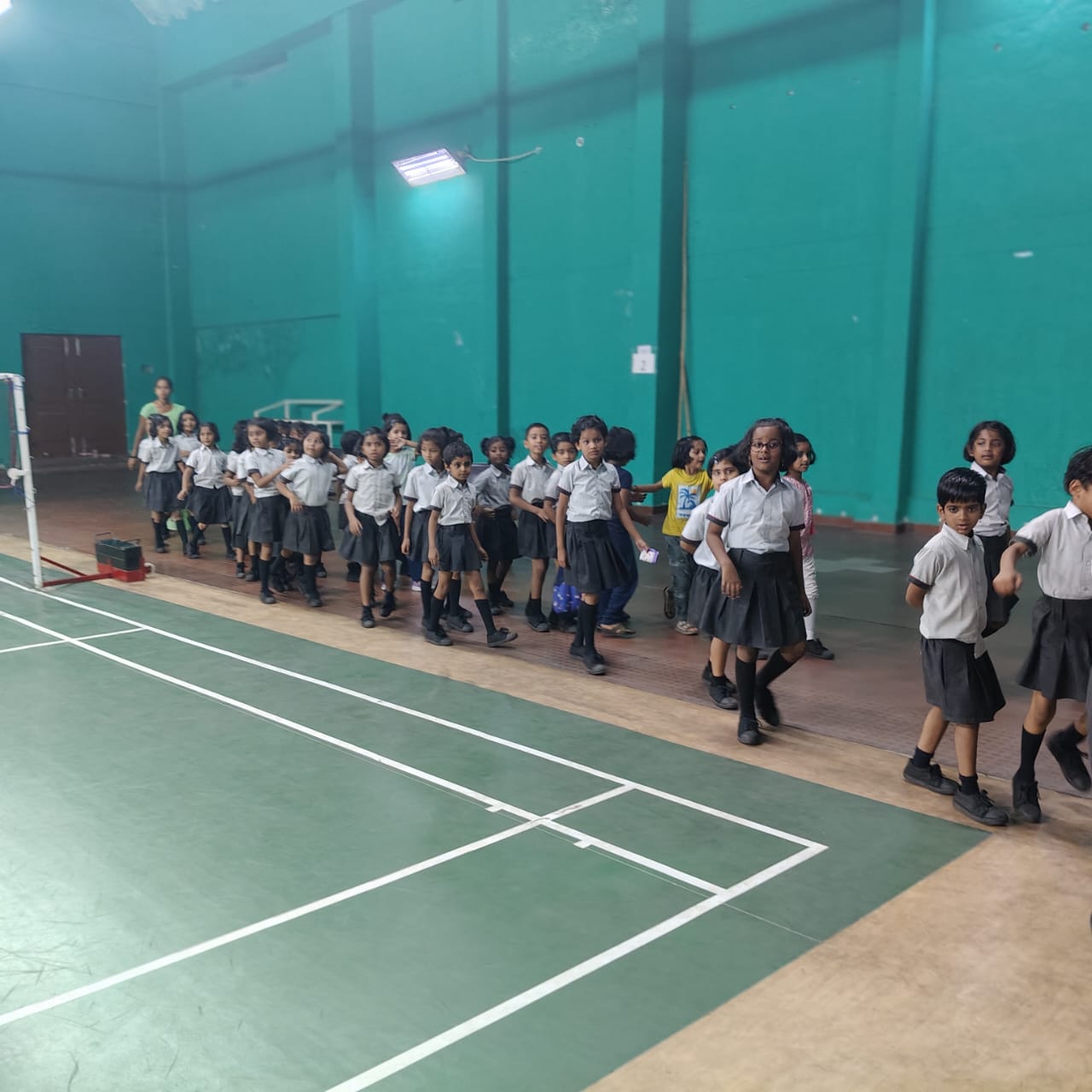
On Tuesday, 7 July 2026, the students of Class I visited the Ballari District Stadium along with their respective teachers. The stadium is about 6.1 km away from Dream World School.
A stadium is a large open or enclosed structure used for sports, games and other public events. It usually has a big playground in the centre, surrounded by seating for spectators. Stadiums are used to host various games like cricket, football, athletics and cultural programs. They help to promote physical fitness, teamwork and entertainment. They are the important places for athletes to practice, compete and show their talents infront of the large audience.
With the objective to know the basic infrastructure of the stadium and to know the real-life experience in the stadium our students visited the Ballari District Stadium as a part of the educational programme.
The Ballari District Stadium is a well-maintained sports complex that hosts various athletic events, football matches and other games. The stadium was built in the year 1974 and renovated in the year 2023. The district-level sports are held in this stadium. The Government or the sports authority owns the stadium. The stadium has a large ground, a running track, hockey turf, shot-put sector, badminton court, multi-gym, swimming pool and seating arrangements for spectators. It also included with facilities like training equipments for players. The stadium has 2000 members seating capacity. The district commissioner gives permission to conduct any sports/cultural events in the stadium. The ground is renovated with synthetic material which helps to conduct national level sports to the athletics and trainers and only this stadium has 400 m synthetic surface running track in Ballari. The running track has 8 lines with distance between each line of 1.22 m. A shot-put sector has radius around 1.25 m. The stadium has different tracks for throwing sports like discus, shot-put and javelin. Athletics have access to high quality synthetic surfaces safe for training and competition in events like jumping and throwing.
The visit helped our students to gain the practical knowledge of basic infrastructure and real-life exposure of the stadium. We thank the Assistant Director of Youth Empowerment Sports Centre for her support in fulfilling our objective of this field trip successfully.
* * *
A Report on Field Trip # 1 (Class – II)
To: Bheem Leela Farms, Ballari 2026-2027
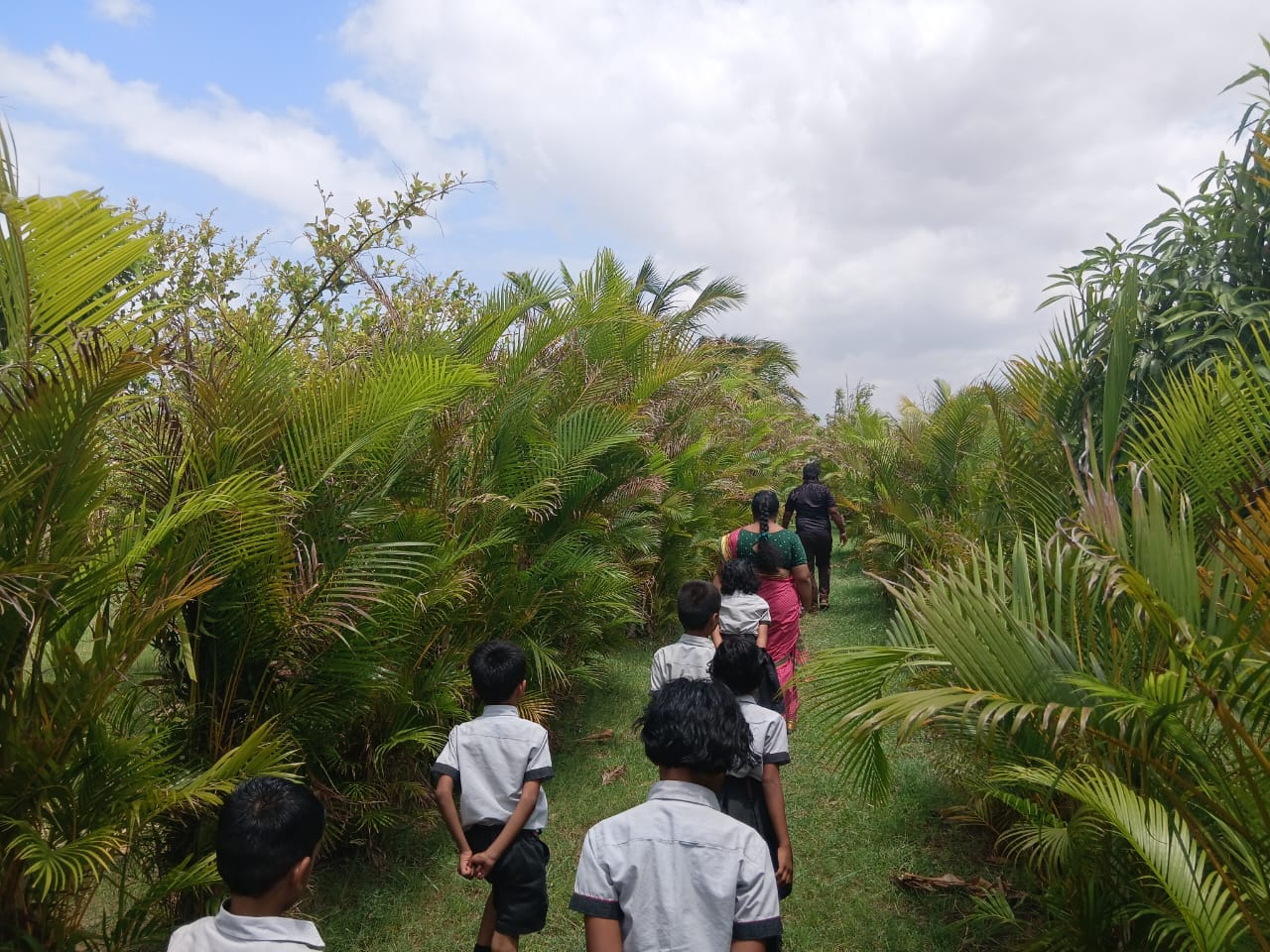
On Wednesday, 8 July 2026 the students of Class II were taken to Bheem Leela Farms to learn practically about a farm. The area of the farm land is 5 acres. It is approximately 9 km away from Dream World School.
Our students were eager to visit the ‘Bheem Leela Farms’, as they wanted to know about the different varieties of fruits and vegetable plants grown there. The land is taken care by the labourers and the landlord Bheema Reddy. One of the labourers who works in the farm explained about different types of trees and plants of the farm to our students with great patience. The farm was designed to educate and entertain the kids, providing a unique opportunity to connect with nature and learn about sustainable farming practices.
There are different varieties of fruit plants in the farm including coconut trees, banana trees, mango trees, rose plants and other varieties of flowering plants. The owner has also built a beautiful house surrounded with greenery in the farm. The farm also has a cow barn and a pet dog. Bheem Leela Farms offers a peaceful environment with fresh air to the visitors.
Students were happy to know the different types of plants cultivated in the Bheem Leela Farms and the facts about the farm land. They understood the uses and importance of plants and trees. They enjoyed having their lunch and playing games in the garden.
We thank Mr Bheema Reddy and the labourer, for their co-operation in making our field trip a successful one.
* * *
A Report on Field Trip # 1 (Class – III)
To: ‘Nava Jeevana’, the Rehabilitation Centre for the Disabled, Ballari. 2026-2027
Rehabilitation centre helps the disabled to improve abilities that they need for their daily life. These abilities may be physical, mental, and/or cognitive (thinking and learning). They may have lost them because of a disease or injury or as a side effect from a medical treatment or by birth.
On Thursday, 9 July 2026, the students of class III along with teachers and assistant staff visited ‘Nava Jeevana’, the rehabilitation centre for the disabled, as a part of educational programme. It is 6 km away from Dream World School which is located in Vidya Nagar, Ballari. It was established in the year 1992.
‘Nava Jeevana’ is a rehabilitation centre for the disabled in Ballari. This centre works to restore physical, sensory and mental capabilities among the patients. It has a classroom for academics and physiotherapy room for therapeutic support. The centre comprises of two separate buildings namely Prathibhalaya for boys and Nava Jeevana for girls to stay in.
Sister Francina is the superior person of ‘Nava Jeevana’ and Sister Cluny, one of the staff explained our students about the mission of Nava Jeevana and about the various disabilities of 40 children who are totally disabled. Sister Cluny and the staff looks after the disabled children by providing basic needs and the physiotherapy required.
Mr. Praful is the teacher in ‘Nava Jeevana’, who is blind but himself trains the children who are blind to survive in the society. At our request, he demonstrated the aids to our students which are used to teach the blind children with ‘Braille Script’ and ‘Brallie interpoint slate’ with stylus. These aids brought curiosity among our students at the learning methods for the visually impaired children.
Our students introduced themselves with the children of ‘Nava Jeevana’ and interacted with them very warmly. They exchanged words mutually. Some of our students felt emotional at their state of being and the way they lead their life in ‘Nava Jeevana’ by music class, dance and physiotherapy and yoga classes.
This visit was a wonderful experience for our students, as it provided a good opportunity for them to observe and understand closely the struggle for education and routine works of the physically challenged people and visually impaired children of ‘Nava Jeevana’. All our students and staff wished the children of the rehabilitation centre for their well-being. The main motto of a rehabilitation centre is to make the disabled children to improve abilities that they need for their daily life and to make them independent.
We are thankful to the management and the staff of ‘Nava Jeevana’, for their co-operation in making our field-trip meaningful.
* * *
A Report on Field Trip # 1 (Class – IV)
To: State Bank of India, Station Road, Ballari, Ballari 2026-2027
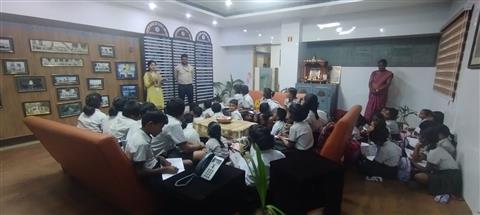
The State Bank of India is India’s largest public sector bank, providing a wide range of banking and financial services to individuals, businesses, and institutions. It plays a vital role in promoting savings, financial security, and the economic development of the nation.
To learn practically about the State Bank of India, the students of Class IV were taken to the SBI, Station Road, Ballari, on Friday, 10 July 2026. It is approximately 5 km away from Dream World School.
The main objective of the trip was to make the students understand and learn about the functioning of a bank and various banking services offered by the State Bank of India. The visit aimed to create awareness about financial literacy, banking operations, saving habits, and the importance of banks in the economic development of the nation.
The State Bank of India, is 97 years old and was established by British government in Bharat. The bank was originally established in 1919 as the Imperial Bank of India. Following the nationalization of the Imperial bank in 1955, it was renamed the State Bank of India, under which it continues to operate today. Mr. Madhukeshwara. SM the Manager of SBI explained about the state bank and the services it offers. During the visit, the students were introduced to the various departments of the banking operations. He explained different types of accounts such as Savings Account, Current Account, and Fixed Deposit. They also demonstrated the process of cash deposits, cash withdrawals, cheque clearance, passbook updating. Students were also given the information about educational loans, personal loans, home loans etc.
The students actively interacted with the bank officials and clarified their doubts regarding banking procedures. They gained practical knowledge about financial management, digital banking, and the importance of saving money from an early age. The visit was highly informative and helped students understand how a bank functions efficiently to serve individuals, businesses, and society.
Our students were delighted to visit the State Bank of India and learn about its banking services and financial operations. We express our sincere gratitude to the Branch Manager and the entire staff of SBI, for their warm hospitality, valuable guidance, and wholehearted cooperation in making our educational visit a meaning full and successful learning experience.
* * *
A Report on Field Trip # 1 (Class – V)
To: Moka Water Reservoir, Moka. 2026-2027
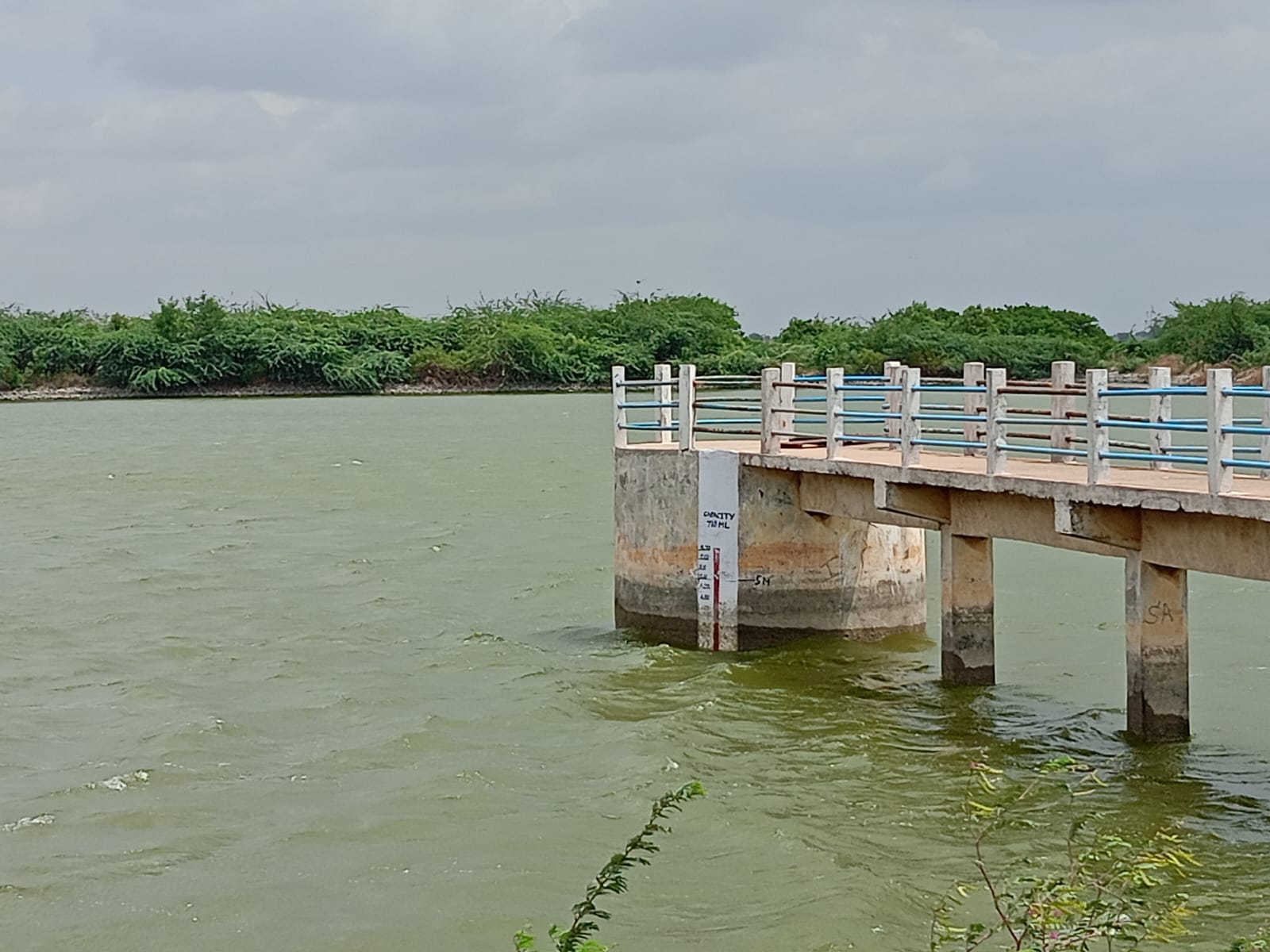
On Monday, 6 July 2026, the students of Class V visited the Moka Water Reservoir. The water reservoir is about 11 km away from Dream World School.
A water reservoir is a larger artificial storage area where water is collected and preserved for future use. Reservoirs are usually created by constructing the dams across rivers to store rainwater and river water. They play a vital role in supplying water for drinking, irrigation, industrial use and electricity generation. These reservoirs are an important resource for managing water and meeting the needs of people throughout the year. With the objective to know about the water reservoir and its filtration process in real-life experience, our students visited the Moka Water Reservoir as a part of the educational programme.
Mr. Pradeep welcomed us and guided our students by explaining about the water reservoir and its filtration process.
Natural water from rivers, canals etc. is not considered suitable for drinking. Therefore, this water should be treated first, hence to treat the natural water and to purify, the water reservoir was established. By filtration process, the water will be suitable for human consumption and it can be supplied to the entire city for drinking purposes.
Moka Water Reservoir was established in the year 1964 by Mysore Emperor Jayachamaraja Wodeyar. Raw water from the reservoir is passed through screen like structures which have holes. The water is then collected in a sedimentation tank. Sedimentation is the process of settling down the large sediments under the force of gravity. In this step, large sediments settle down due to greater density than water. The water on the top is moved to another tank called loading tank. While large sediments get separated in the sedimentation tank, finer particles are still present in water.
These fine particles are separated from the water by the process of loading in the loading tank where a solution of alum is dissolved in water. Alum form insoluble gelatinous flocs by coagulating all the finer particles by absorbing them and forming their aggregates. These aggregates which are bigger in size are now capable of settling under the force of gravity. The supernatant water is then moved to filtration tanks. In the filtration tank, a set of layers of fine sand, coarse-sand or gravel and coarse-gravel is arranged in the form of a bed. This process of filtration removes the colloids and other suspended material remaining in water including micro-organisms also. The filtered water is finally purified by using disinfectants e.g.: Chlorine gas. Disinfectant kills pathogenic as well as other microorganisms in water. After disinfection water is pumped into overhead tank. From there, the water is pumped to Gandhi Nagar Water Booster’s overhead tank for domestic distribution.
The residue of the filtered water containing fine gravel and sand is sent to the nearby fields for irrigation purpose.
The visit helped our students to gain the practical knowledge of water reservoir and its filtration process in real-life exposure. We thank the members of Moka Water Reservoir, for their care and support in fulfilling our objective of this field trip successfully.
* * *
A Report on Field Trip # 1 (Class – VI)
To: The Robert Bruce Foote Sanganakallu Archaeological Museum, Ballari. 2026-2027
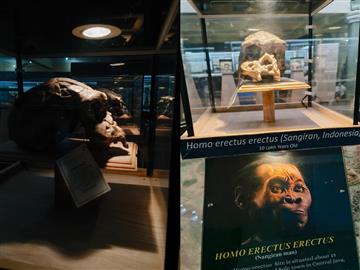
On 30 June 2026, the students of class VI along with teachers visited the Robert Bruce Foote Sanganakallu Museum, Ballari District. It is 4.3 km away from Dream World School. We left for the place from school at 10:30 a.m.
With the objective of making children aware about evidences of stone age and the tools used by the people in pre historic period we visited the Robert Bruce Foote Museum.
The students were excited to know about the Museum. We were guided by Ms. Gowri (Technical Assistant) who gave us the information and the historical background of the Museum and information about the pre-historical sites in Sanganakallu.
The Archaeological Museum is a unique prehistoric museum of the stone age related to Sanganakallu, a pre-historic site near city Ballari. The museum is renamed as “Robert Bruce Foote” due to his enormous contribution to Indian pre-historical sites surveys carried out by him. Robert Bruce Foote (CE 1834-1912) is a geologist, archaeologist, ethnographer, paleontologist, musicologist and an artist. He was appointed in the Geological Survey of India (GSI) and was posted to Madras Presidency, Hyderabad Region, and Bombay Presidency with the intention to map the mineral deposition in the southern regions, where he accidentally discovered 459 pre-historic sites of the country.
The museum houses a vast collection of African theories on pre-historic site information in the ground floor and in the first floor with more information on the Sanganakallu site. Most of the collection is on stone tools as Sanganakallu was once a pre-historic stone tool factory dating back to 2000 BC.
One can also find artefacts like ceramic pottery, shellbone steatite beads and neolithic age ash mound fragments. There is also a sarcophagus child burial with the ritual pot of megalithic excavation found at Kudithini and is kept assembled in the museum.
Mr. Korishettar, the former Professor of History and Archaeology, Karnataka University, and the Director of the Museum Committee was the key behind setting up a museum in Ballari with the help of Government. As a Ballarian we have to feel proud to have such Archaeological Museum to gain the knowledge about prehistoric period.
We thank Ms. Gowri as a guide for her support and cooperation in fulfilling our objective in this field trip.
* * *
A Report on Field Trip # 1 (Class – VII)
To: Soil Health Centre, Ballari. 2026-2027
Soil serves as the essential base for plant growth, as it delivers the necessary water and nutrients. Only nutrient-rich soil can support healthy plant development, so preserving its fertility is very important. Conducting regular soil tests allows us to understand its nutrient levels and fertility status. This information helps farmers decide which crops are best suited for the soil and what kind of nutrients should be added. Productive soil leads to higher crop yields, which is key to feeding a growing global population.
On Wednesday, 1 July 2026, the students of Class VII visited the Soil Health Centre which is one of the institutions of ICAR, the Indian Council of Agricultural Research in Ballari at APMC along with their respective teachers as a part of educational programme. It is 6 Km away from Dream World School.
The Indian Council of Agricultural Research (ICAR) is an autonomous organisation under the Department of Agricultural Research and Education (DARE), Ministry of Agriculture and Farmers Welfare, Government of India. It is responsible for coordinating agricultural education and research in India. The ICAR has its headquarters at New Delhi and has many branches across India.
We visited one of them located in Ballari named as Soil Health Centre, which was established in 1974. It consists of total five working staff which includes one soil analyst, one assistant director of agriculture, two field workers and one water analyst. About 100 soil samples are checked by each technician every day.
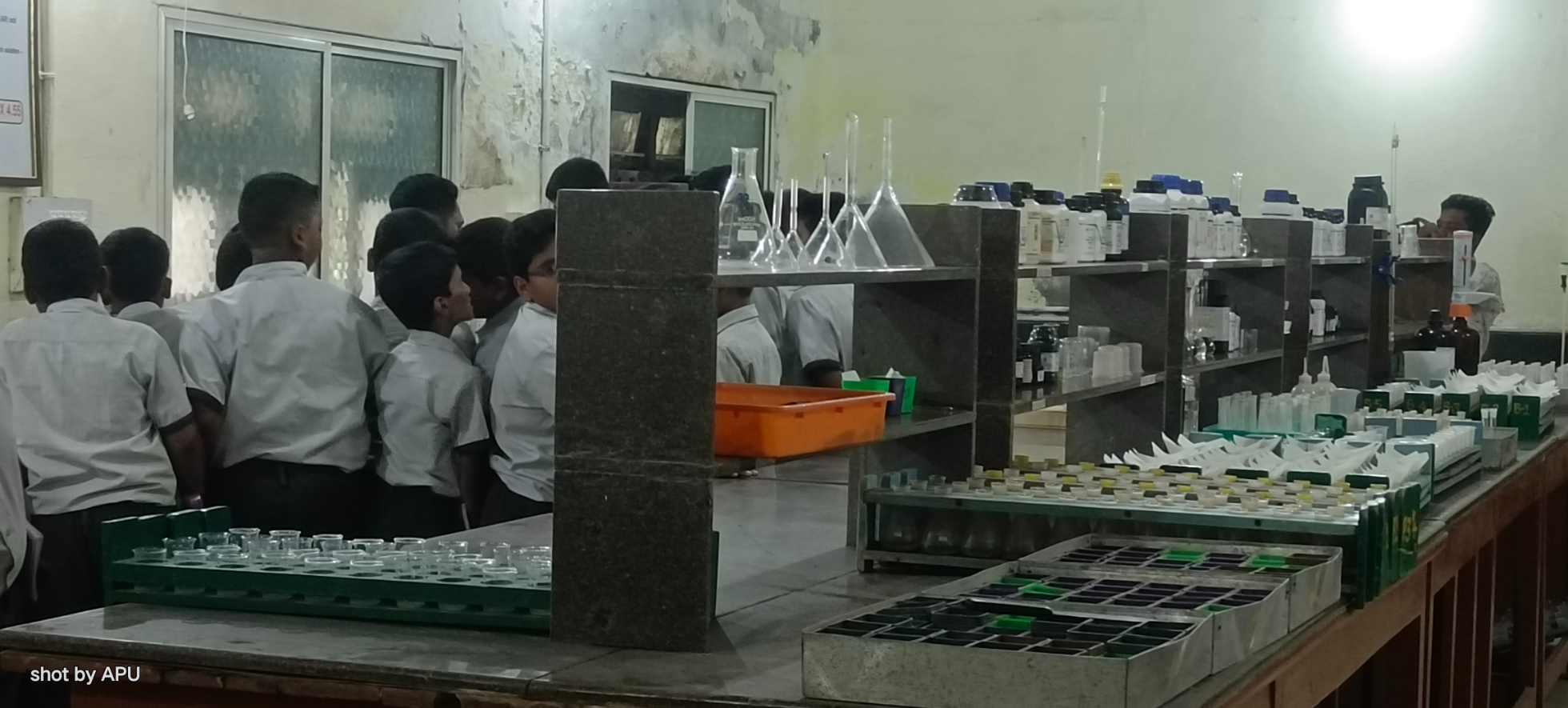
Mr. Umesh, is the Assistant Director of Agriculture, at Soil Health Centre in Ballari, Ms. Kavitha explained the students regarding the 17 essential nutrients (such as C, H, O, Mn, Mg, N, P, K etc..) that are needed for the complete life cycle of plants. There are two types nutrients like micro and macro nutrients. The macro nutrients are required for the plants are NPK and micro nutrients are Cl, Fe, Mn, Cr, Zn, Cu, Mg etc. He also explained that how do they collect the soil samples from the fields to test the nutrients present in it and after testing the samples, they will suggest the necessary fertilisers to be added to it during the process of agriculture for a better yield. At the Soil Health Centre of Ballari only nine nutrients are checked that assist the agricultural process. The staff also showed and explained about the instruments like pH meter, EC meter, Flame Photometer, Visible Spectrophotometer and Atomic Absorption Spectro Photometer to the students which are used to test the different nutrient levels of the soil.
They check the pH level and EC level of soil and resolute whether the given sample of soil is suitable for growing crops or not. If the pH value is from 6.5 to 7.5 it is graded as normal range, below 6.5 is acidic and above 7.5 is basic. If the EC level is less than 1, it is considered as normal soil, from 1 to 2 critical range and more than 2 the soil is injurious for growing crops. At the end, Ms. Kavita cleared the doubts raised by the students with utmost patience.
Through this visit, students gained a deeper understanding of soil fertility and its vital role in sustainable farming practices. They learned how maintaining the fertility of the soil can help farmers reduce risks of crop failure, economic losses etc.., improve crop productivity and overcome various agricultural challenges.
We are thankful to Mr. Umesh and his team for their support in fulfilling our objective of the field trip successfully.
* * *
A Report on Field Trip # 1 (Class – VIII)
To: TGY Solar Power Developers, Yerrangali, Ballari, Ballari (Dist.) 2026-2027
A solar power plant is a facility that converts solar energy into electrical energy. The sun is a natural, renewable energy source that is abundantly available throughout the year. Solar power plants utilise specialized devices called solar panels or photovoltaic (PV) cells to absorb sunlight and convert it into electricity.
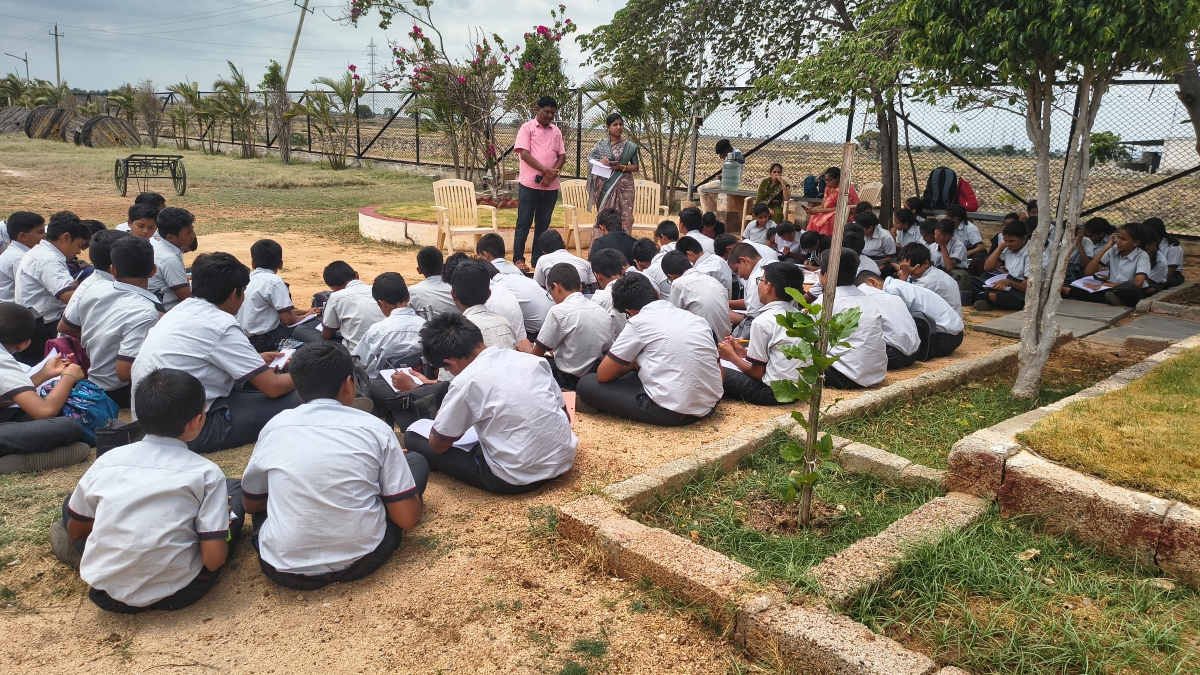
In pursuit of understanding how to harness renewable resources, our eighth-grade students visited the TGY Solar Power Developers in Yerrangali, Ballari, on Friday, 03 July, 2026. The site is located approximately 20.3 km from Dream World School via NH-150A. The plant manager, Mr. Satish Kumar, welcomed us, provided detailed information, and conducted a tour of the facility. Established in 2017 on a sprawling 10-acre site, the TGY Solar Power Plant has a capacity of 2.2 MW and is a non-governmental initiative.
Generally, there are three primary types of solar power plants: on-grid, off-grid and hybrid systems. The TGY Solar Power Plant is an off-grid facility with a total capacity of approximately 2.2 MW, utilising 6,780 fixed solar panels oriented north-south. These panels are arranged in sets of 40, termed "tables," with 16 tables constituting a String Module Box (SMB). Each SMB connects to a transformer for electricity supply, and the plant operates on the fundamental principles common to all solar power plants. The panels receive sunlight from sunrays and the peak time to absorb sunlight is 11:00 a.m. to 4:00 p.m. To maintain efficiency, the panels are cleaned with mineral water biweekly to prevent salt deposits
The solar power plant generates direct current (DC), which is subsequently converted into alternating current (AC) with the assistance of a generator. The generated electricity is then supplied to the GESCOM grid to provide power to the nearby areas of Kurugodu.
Solar energy is a renewable resource that can be harnessed and utilised without producing pollution. It is abundantly available, particularly in semi-arid regions. It is essential for individuals to utilise such sustainable energy sources to protect the environment and conserve non-renewable resources like coal.
We express our gratitude to the staff of TGY Solar Developers for their support and cooperation in educating our students about the operational mechanisms and significance of solar panels.
* * *
A Report on Field Trip # 1 (Class – IX)
To: Halley’s Blue Steels, Hirehal near Obulapuram, Ballari (Dist.). 2026-2027
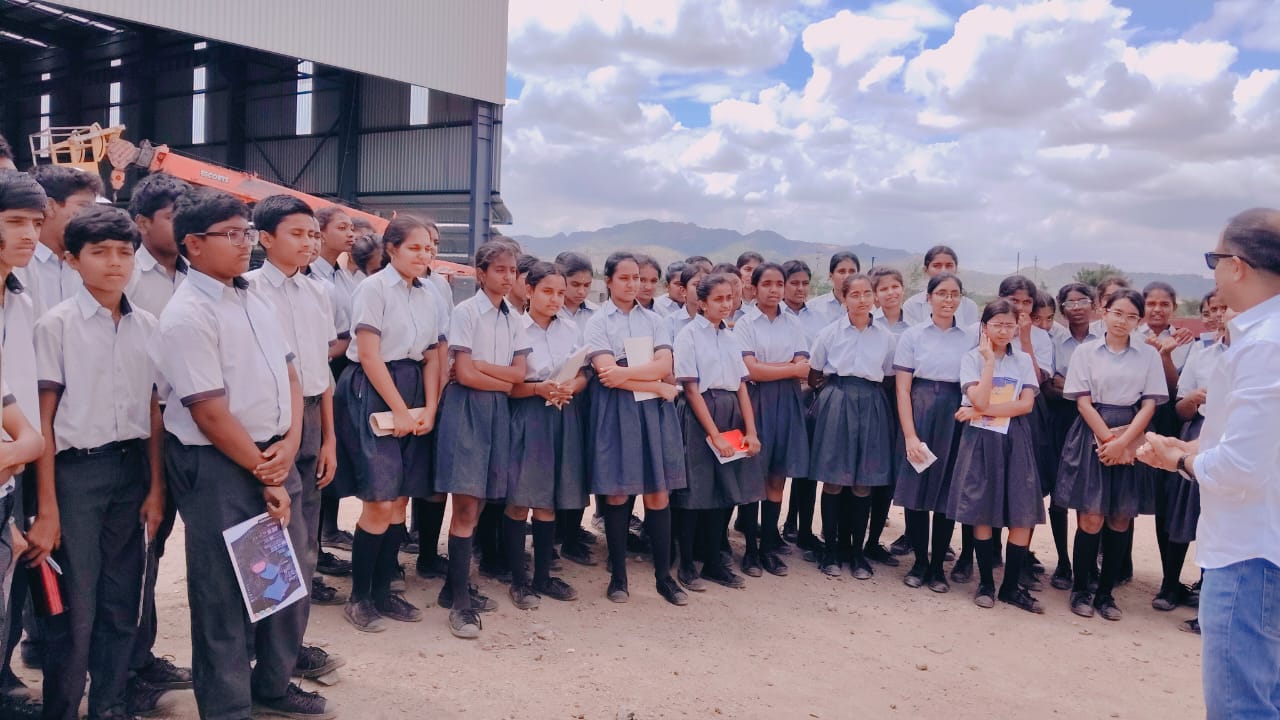
On Monday 29th June 2026, our students of class IX along with respective teachers visited Halley’s Blue Steels, Hirehal near Obulapuram Ballari, which is 17 km away from Dream World School.
It was a great opportunity to understand the industrial fabrication of steel sheets and rods using several moulds to construct store houses, stadiums and building roofs.
Steel is a very strong metal which can be manufactured in different shapes according to specific requirements. Steel is actually known for its strength, and it makes the building structures stronger. In addition, it is highly durable and recyclable material, which means it lasts longer than decades. Strength and durability are two big reasons most architects suggest steel for building constructions. With the technological advancement, various types of steel structures and roof sheets are prepared with earthquake resistance, wind resistance and heat resistance. Steel can answer climate-flexible metropolitan areas, effective and low cost building needs in the country.
Halley’s Blue Steels was established in 1993 by Mr. Shiva Murthi and it is now spread all over India and extended in East Africa too. There are about 450 people working in the industry A team of engineers explained about the company Halley’s Blue in details, they also narrated how Mr. Shiva Murthi got the name Halley’s Blue. The company is headed by Mr. Vishwa Murthy (C.E.O).
Engineers explained us about the raw materials (Iron sheets) obtained from the JSW steels. Their main products are beams and sheets. The iron sheets will be checked and processed to cutting machine into desired size. Then the sheets are welded by the skilled workers. Once welding is done it will be processed in the profiling machine. These profiled sheets are cut into C-shape and Z-shape. The sheets are further processed in sand blasting machine which makes the surface rough and holds the paint. First sheets will be coated with 40-micron thick red oxide and then coated with 40-micron thick paint under high pressure on the sheet to prevent corrosion (rusting). Once the process is completed it is delivered to desired places with demand.
As the employees are working with huge and sharp machines, they give more preference for their protection. Different colour code helmets are given for different employees based on the designation and positions in the working place such as white helmet for engineers, red helmets for electrical workers, blue helmets for supervisors. Safety persons use green helmet and grey helmets are used by visitors in the place.
Steel, is a valuable and cost-effective material and is the only material that can provide the quality required for constructions. The use of steel assures greater environment friendliness than other types of materials.
We are very thankful to the staff of Halley’s Blue Steels for their support and cooperation in educating our students about pre-engineering works.
* * *