A Report on Field Trip # 2 (Class - L.Kg)
To: Nursery (Plants) Dt.11/08/2026 2026-2027
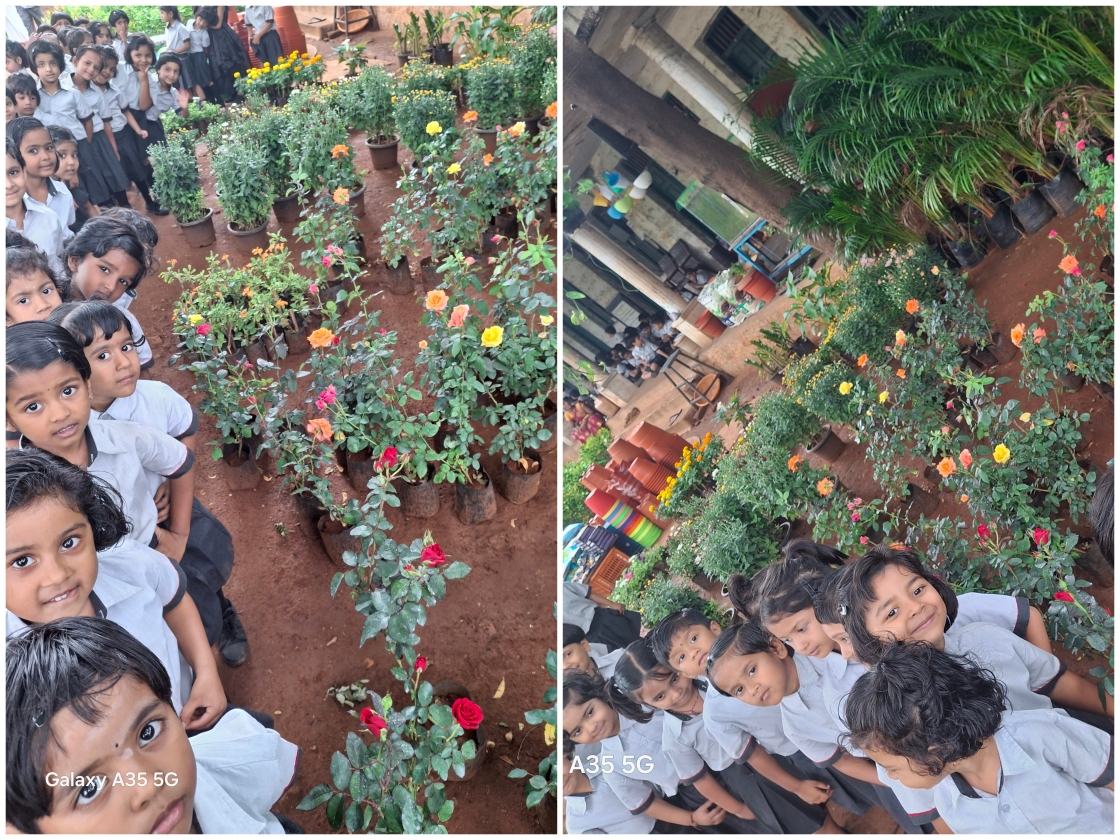
Nursery is a place where young plants are grown for sale or for planting somewhere else. The main objective of this trip was to enable the students to understand the importance of a nursery and improve their observation skills.
On Tuesday, 11th August 2026, as part of our educational programme, the students of L.Kg. visited the nursery located near sangam circle, Ballari. The nursery is situated approximately 4 km away from our school. We reached the destination at 10:45 a.m.
The visit was planned to provide the students with an opportunity to move beyond the confines of the classroom and experience nature in a direct and engaging manner. During the visit, the students observed a fascinating variety of flowering plants, medicinal herbs, fruit-bearing plants, saplings and ornamental plants. The students were particularly delighted to observe leaves and flowers of different shapes, sizes and colours.
The journey itself was filled with joy and excitement, as the students recited rhymes in the bus and thoroughly enjoyed the ride with their friends. The hands-on experience generated enthusiasm among the young learners.
We sincerely appreciate and thank the nursery staff for their warm hospitality and cooperation in making the visit informative, enjoyable and memorable for our young learners.
The students returned to school by noon, carrying with them not only knowledge about plants but also joyful memories of a wonderful learning experience of nature.
A Report on Field Trip # 2 (Class - U.Kg.)
To: Nayamika Farm Dt.10/08/2026 2026-2027
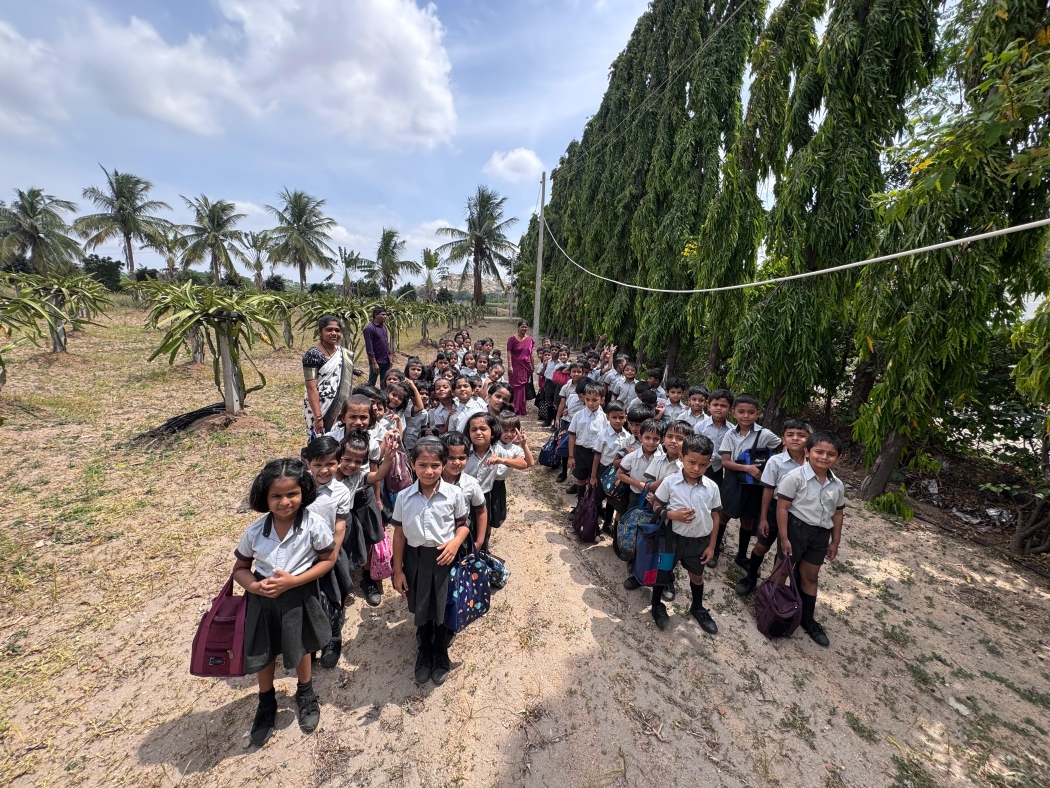
A farm is an area of land used for agricultural activities such as growing crops, cultivating plants and producing food. Farms play an important role in our lives by providing us with food and other useful products. There are different types of farms, including vegetable farms, fruit farms, dairy farms and more.
On Monday, 10 August 2026 the students of class U.Kg. visited Nayamika Farm to gain practical learning experience. The farm covers an area of 18 acres and is located approximately 3 kilometres from Dream World School. The farm is owned by Mr. Rajesh Reddy and is maintained by Mr. Gadhilingappa, a hardworking and knowledgeable caretaker.
The children were excited to observe dragon fruit plants, coconut trees, ashoka trees, sapodilla (chikoo) trees, drumstick trees, java plum (jamun) trees and several varieties of flowering plants. The students explored the farm and learnt about nature with plants and agriculture. This experience helped them understand how plants grow and how important trees and plants are for our environment and everyday life.
After exploring the farm, the children played games and had their lunch under the cool shade of the trees. They had a wonderful time breathing in the fresh air and a peaceful natural surrounding.
The field trip provided students with an opportunity to learn beyond the classroom while developing a greater appreciation for nature and agriculture.
We sincerely thank Mr. Rajesh Reddy and Mr. Gadhilingappa for their kind support, warm hospitality and cooperation in making this field trip successful, enjoyable and memorable for our young learners.
School Re-Opening Day Celebration of 2024-2025
A Report on Field Trip # 2 (Class - 1)
To: Sri Kote Malleshwara Temple, Ballari Dt.11/08/2026 2026-2027
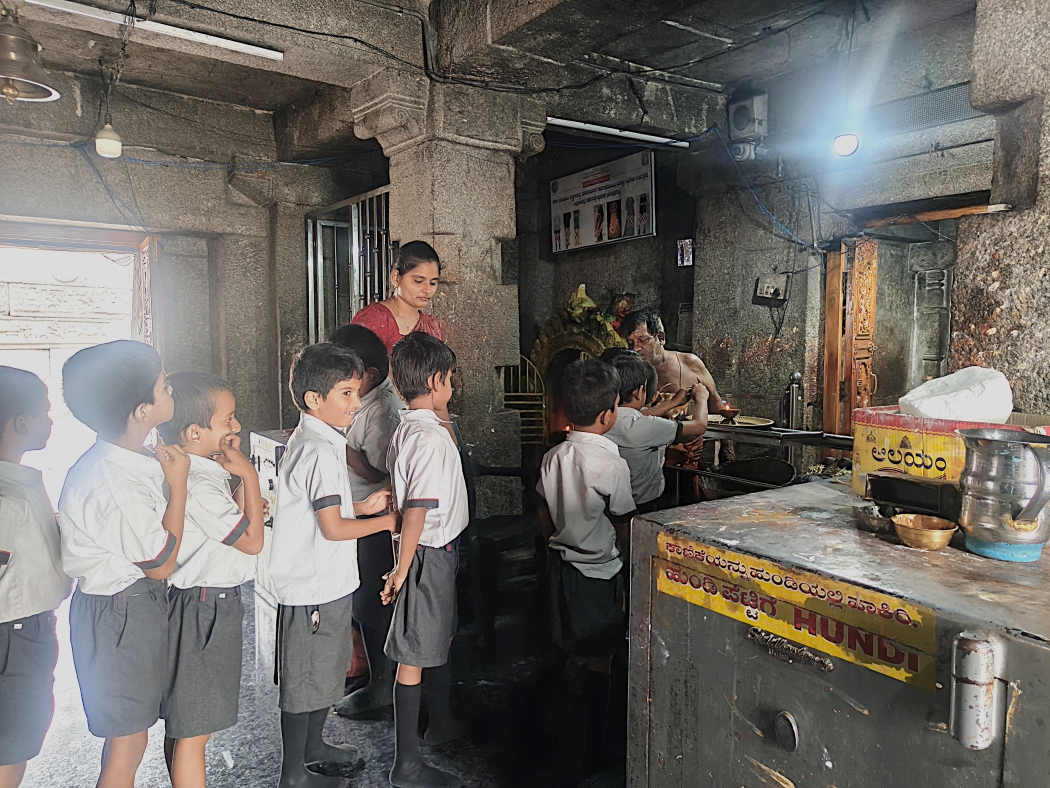
On Tuesday, 11 August 2026, the students of Class I visited Sri Kote Malleshwara temple along with their teachers. The temple is about 5 km away from Dream World School.
The objective of the visit was to learn and understand about the temple.
Field Observation
Kote Malleshwara temple is a Hindu temple dedicated to Lord Shiva located in Ballari. It is one of the oldest temples in the city and has a history of more than 500 years. The temple is famous for its annual car festival which attracts thousands of devotees from nearby places.
We were guided by the priest of the temple who explained in detail about the history of Sri Kote Malleshwara Temple. According to his explanation, Mallayya a merchant, devotee of Lord Shiva used to travel different places to sell food grains. He never used to have food until he performs his daily rituals to Lord Shiva. Once when he was travelling, he halted in Ballari but could not find a Shivalinga to perform the rituals on the Poornima day. Mallayya asked his helper who was travelling with him to search for a Shivalinga. But he could not find anywhere and then he made a plan to convince his master. He used a balla (a measuring cup or seru used to measure grains) and placed it upside down on a stone as Shivalinga and asked Mallayya to perform his rituals to it. Mallayya, the merchant who could not see properly believed the balla as Shivalinga and worshipped. Eventually, that place was turned into a temple dedicated to Balleshwara or Shiva which became distorted to Malleshwara and thus Ballari derives its name because of this temple. The temple is a popular attraction to a huge crowd during Maha Shivaratri.
Students took the blessings of Lord Shiva, chanted shlokas in the temple and enjoyed their lunch.
Conclusion
The field trip was successful and we believe that the objective was achieved as the students know about the temple. It was an informative trip for the students.
We thank the management of the temple for their support and cooperation in fulfilling our objective in this field trip.
School Re-Opening Day Celebration of 2024-2025
A Report on Field Trip # 2 (Class - 2)
To: Shiva Leela Temple Dt.10/08/2025 2026-2027
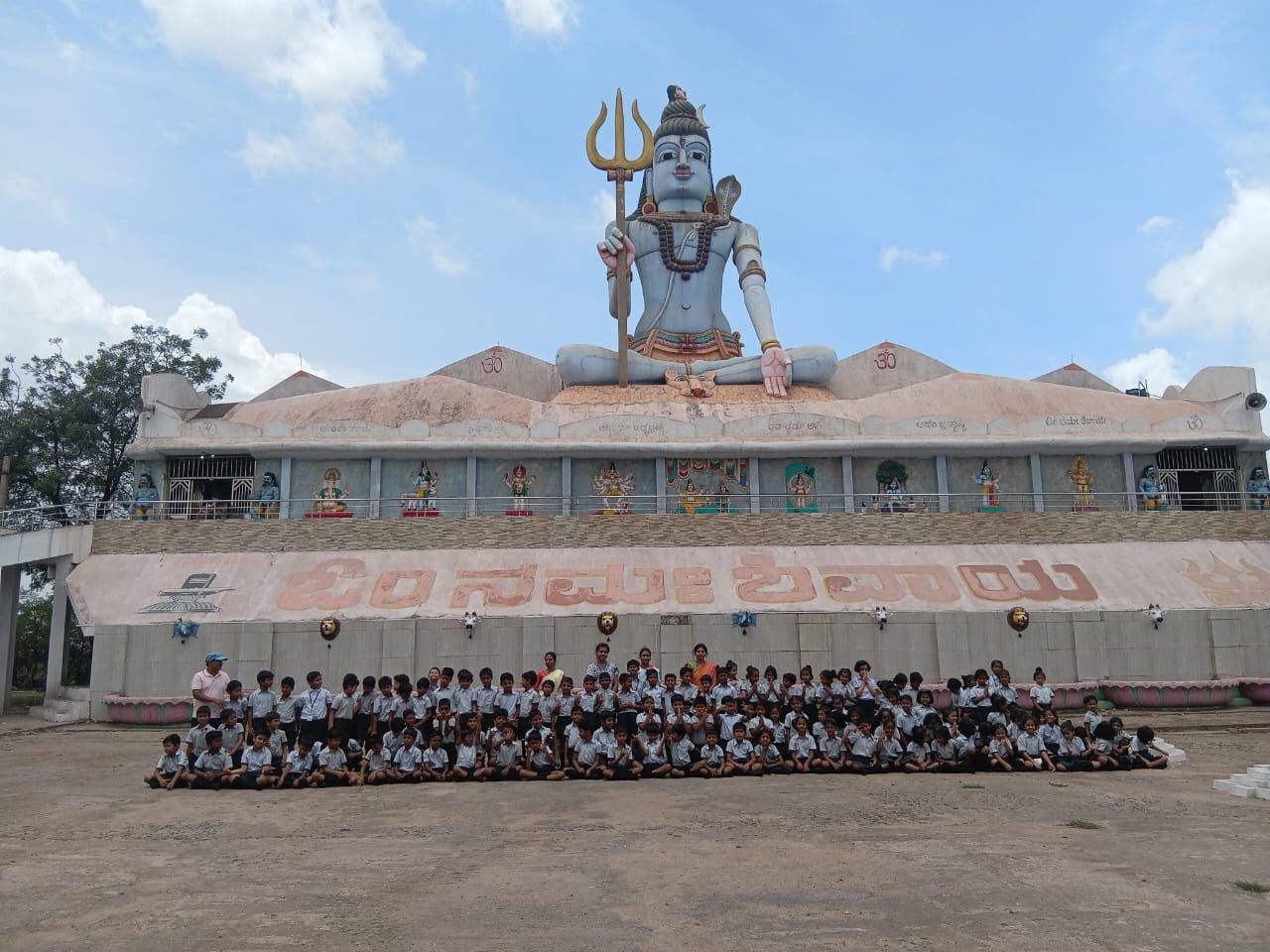
A temple is a place where we spend time, to pray and thank God for all his blessings and to relax ourselves. The students of Class II along with teachers visited the Shiva Leela Temple, on Tuesday, 10 August 2026 which is located in Veniveerapura, Ballari. This temple is also called the Jyothirlinga temple.
Shri Bhima Reddy had constructed this temple. It was established in the year 2015. At present, his son Shri Gurudas Reddy is looking after the temple.
The temple is famous for its 12 Jyothirlingas. It is constructed in such a way that the 12 Jyothirlingas which are present all over India are enshrined in one temple. The students went around the temple and saw the Twelve Jyothirlingas of Lord Shiva namely Somnath, Mallikarjuna, Mahakaleshwara, Omkareshwara, Vaidhyanath, Bheemashankara, Rameshwara, Nageshwar, Kashi Vishwanath, Thriambakeshwara, Kedarnatha and Grishneshwar. Each Jyothirlinga resembles the original form of God Shiva, where they are actually situated. The incharge person Shri Gurudas Reddy explained about the temple to the children.
The temple is very pleasant with beautiful architecture. The students took blessings of God Shiva for a fruitful year. They also chanted shlokas and sang bhajans in the temple.
The students had lunch along with the teachers and played different games in the temple premises. This visit provided a good opportunity for our students to know the names of twelve Jyothirlingas and the places where they are located.
We are thankful to the management and the staff of ‘Shiva Leela Temple’, for their co-operation in fulfilling the objective of this field trip.
School Re-Opening Day Celebration of 2024-2025
A Report on Field Trip # 2 (Class - 3)
To: Moka Forest, Moka, Ballari Dt.13/08/2025 2026-2027
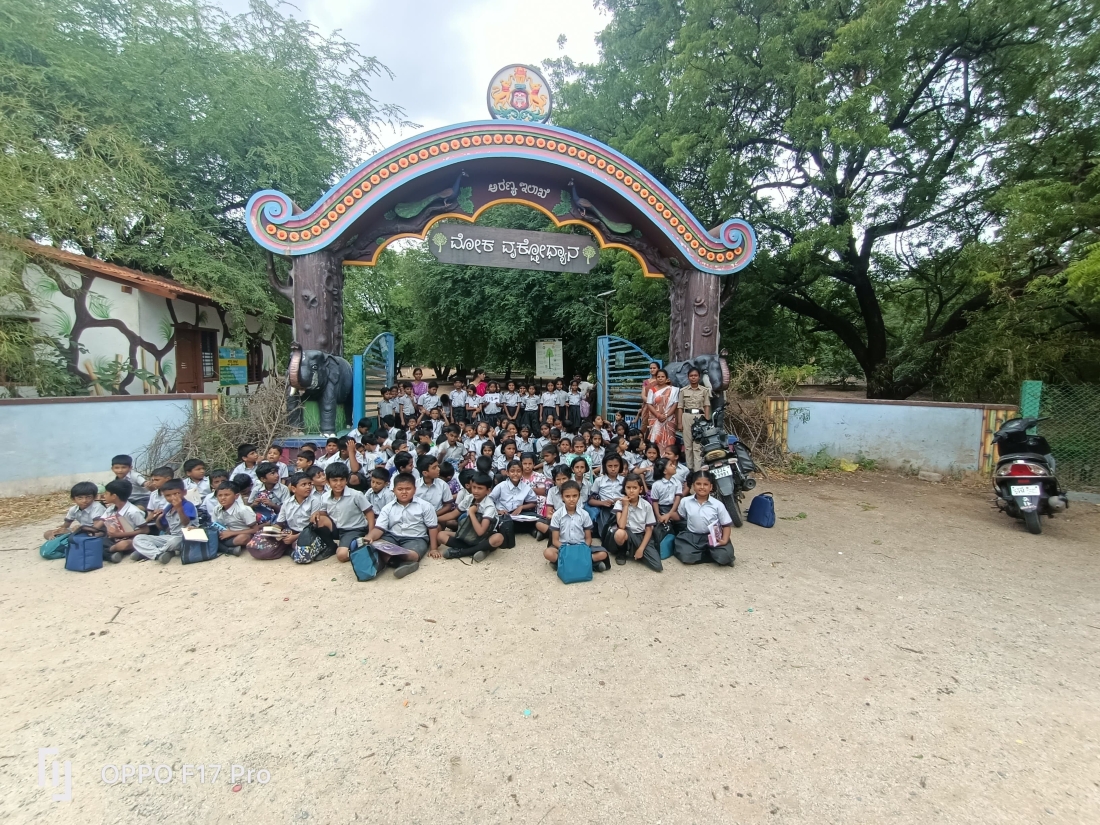
A forest is a complex ecological system in which trees are the dominant life-form. A forest is nature’s most efficient ecosystem, with a high rate of photosynthesis affecting both plant and animal system.
The objective of the trip was to make the students understand and learn about the different types of plants like trees, shrubs, herbs, climbers, and creepers, which plays an important role in overall status of the mankind and the nation.
To learn practically about the different types of plants and their uses, we took the students of Class III along with their teachers to the ‘Moka Forest’ on Thursday, 13 August 2026. The forest is 18 km away from Dream World School which is located in Moka Road, Ballari.
Our students were excited to visit the forest and know about the different types of plants and their functions. The forest has red and black soil which is responsible for the growth of plants and trees. The forest is maintained by Ms.Vijayalakshmi, an incharge person who also shared a lot of information about the forest. The forest is about 1200 acres, with 1800 trees including tamarind, neem, bitter albizia and mysuru fig trees. Animals like deer, snakes and also other birds like peacock are found in the forest.
Later we moved towards the play area where our students enjoyed a lot by playing many adventure games and using the gym equipment set-up for the visitors.
Students were happy to know about the Moka forest and the different plants and trees grown and maintained in Moka forest. We thank the Forest Management for their co-operation in making our field trip a successful one.
School Re-Opening Day Celebration of 2024-2025
A Report on Field Trip # 2 (Class - 4)
To: The Prasad Dairy Farms, Vakarani Camp, Ballari Dt.14/08/2026 2026-2027
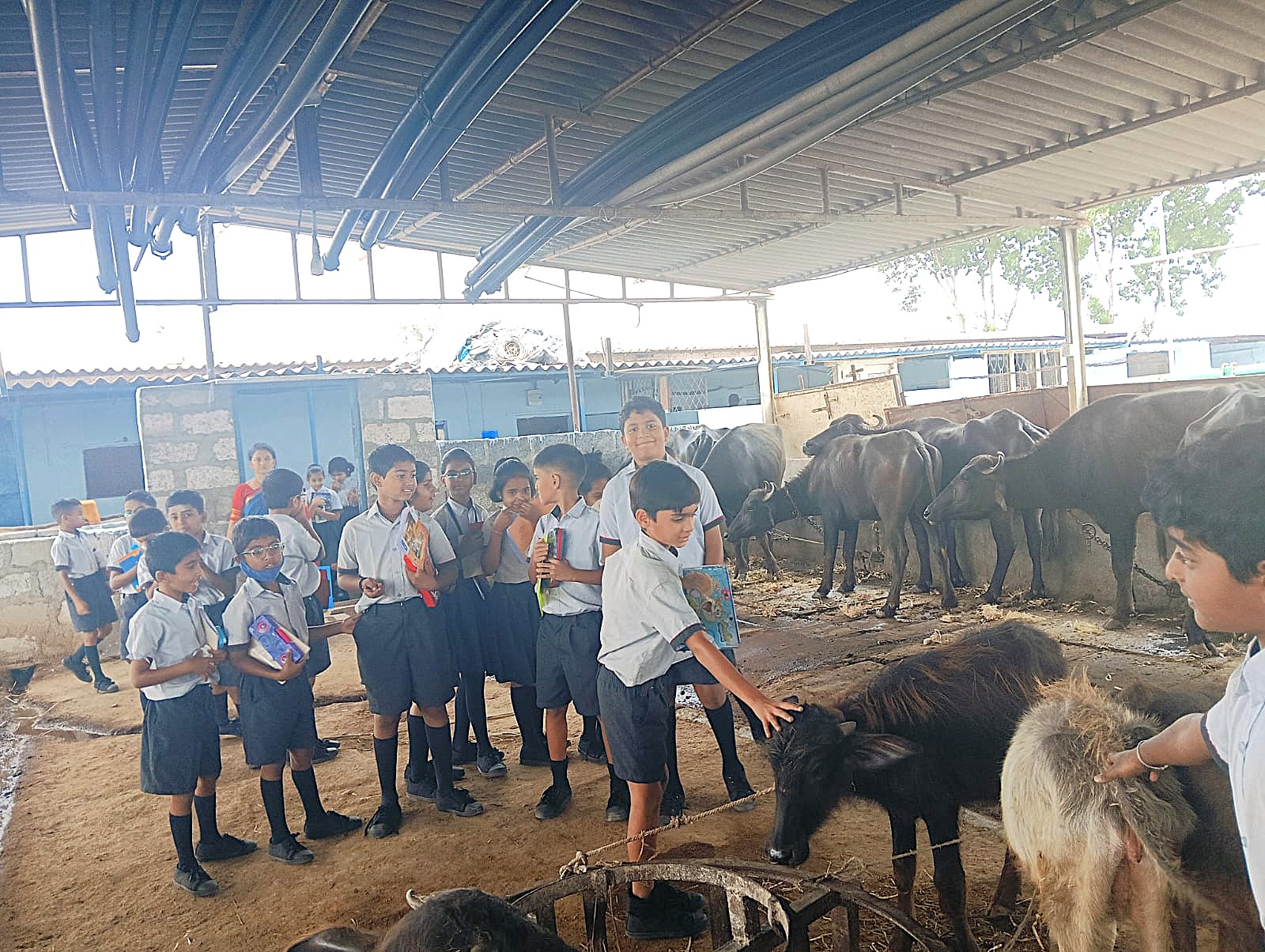
Dairy farming is the agricultural technique concerned with the long-term production of milk, which is then processed to obtain dairy products such as curd, cheese, yoghurt, butter, cream, etc. Consumption of dairy products help us to keep our muscles, bones and teeth strong and support normal growth and brain development.
On Friday, 14 August 2026, the students of Class IV along with the teachers visited the Prasad Dairy Farms which was established in the year 2019. It is approximately 10 km away from Dream World School. The dairy farm is spread over 9 acres and they utilized 6 acres for farming.
Mr. Prithviraj, from Rajasthan is the incharge of the Prasad Dairy Farms. The Dairy Farm has four workers in all.
Mr. Prasad Babu, explained about the Murrah buffalo, farm buffalo and the country buffalo breeds from Punjab and Haryana. It is mainly reared for milk production as it is noted for the highest yield in milk. They feed them with grass, rice husk, wheat and corn which is cultivated in their own farm land. The total number of buffaloes in the dairy farm are 35 with 15 calves. The farm produces 120 liters of milk per day. He explained in detail how organic compost is prepared and discussed its numerous benefits for crop growth. Additionally, he introduced the concept of Jeevamrutha, a natural fertilizer, and demonstrated how it enhances soil fertility in a practical and engaging way for the children. The session was both educational and inspiring, as it raised awareness about the importance of organic food and sustainable agricultural practices among the young learners.
This visit has helped our students to gain the practical knowledge about the Dairy Farm. We thank the management and staff of ‘The Prasad Dairy Farms’, for their support and co-operation in the successful completion of the field trip.
School Re-Opening Day Celebration of 2024-2025
A Report on Field Trip # 2 (Class - 5)
To: The Landforms of Ballari (Fort) Dt. 06/08/2026 2026-2027
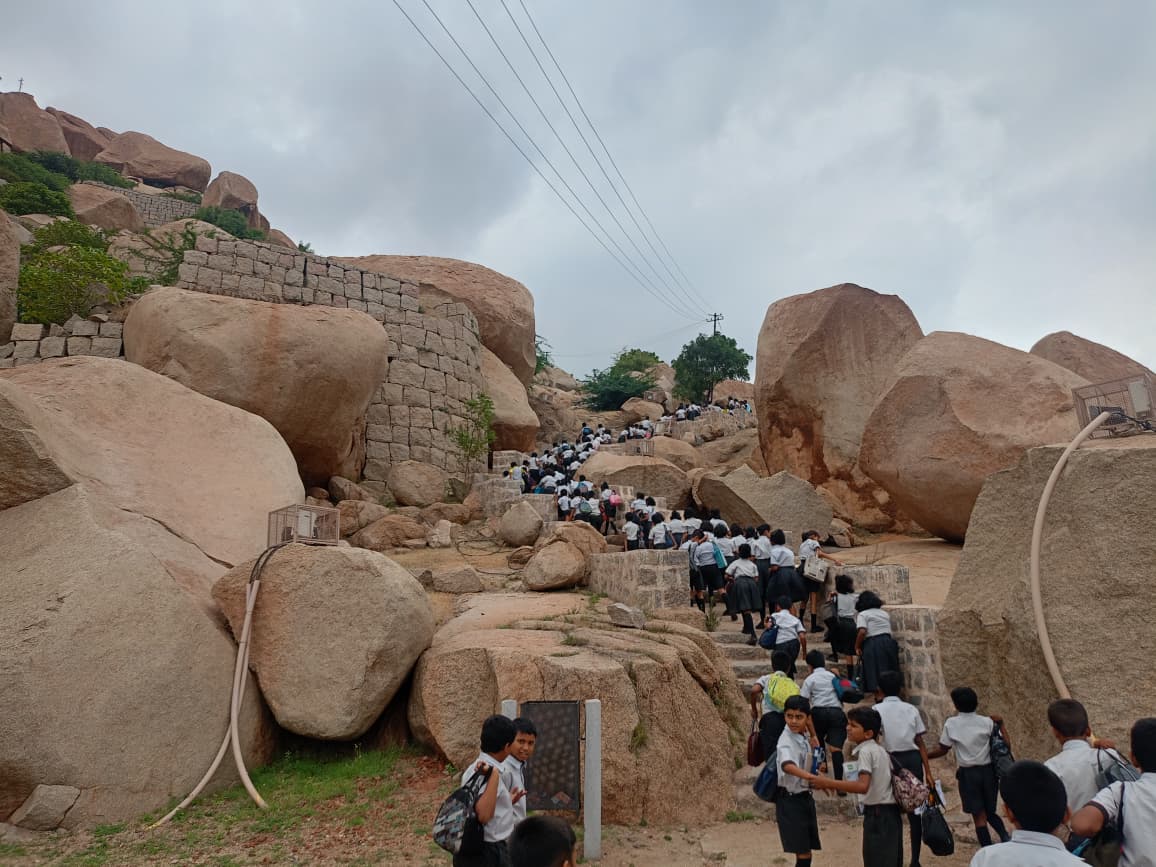
On Thursday, 6 August 2026, the students of Class V visited the Ballari fort and the different landforms of Ballari. The fort is about 6.1 km away from Dream World School.
Ballari hill is a large granite hill located in the city of Ballari. It is one of the most famous landmarks of the region and known for its unique rocky appearance. This hill is made of hard granite rock and rises steeply above the surrounding plains. The upper fort of Ballari, gives great historical and strategic importance and it provides a panoramic view of the city.
With the objective to know the different landforms of Ballari and to know the real-life experience about the structure of Ballari hill, our students visited the Ballari Fort as a part of the educational programme.
Ballari fort was constructed by Hanumappa Nayaka during the rule of Vijayanagara Empire, in the year of 1530 CE. The hill is about 1.5 km long and 0.5 km wide. It has steep slopes on all the sides. The fort is divided into two parts: upper fort and lower fort. The upper fort and lower fort were renovated by Hyder Ali in the year 1769 with the help of a French engineer during 18th century. The eastern side of the fort is higher and steeper. This upper fort became a strong defensive advantage in the historical times. The western side is lower and more accessible. It connects to the lower fort area and the surrounding plains, which supports the agriculture. This hill acted as a natural defensive wall by blocking the way of the enemies and the steep rocky surface slopes made it very hard for enemies to climb and invade.
The Ballari fort is made of single massive rock and so it is called monolithic. It is the second largest monolithic hill in the world. The small valleys and depressions are situated between the two hills of the Ballari fort. The rainwater from the hill flows into the valley and other areas helping in water storage. Around this hill, the land is a part of the eastern deccan plateau, which is slightly elevated and it supports human settlements. There are 40 ponds on the Ballari hill. The Ballari hill has rocky surface which heats up during day time and cools during night times, this causes high temperature in Ballari. Hence, the hill plays an important role as climate deciding factor for Ballari, therefore it is a semi-arid region with low vegetation which depends on the structure of the Ballari fort. There are 401 steps in the Ballari fort to reach the top of the hill. The hill not only adds beauty to the city but also plays an important role in its climate, culture and geography.
The visit helped our students to gain the practical knowledge of the structure and real-life exposure of the Ballari hill and the landforms of Ballari. We thank the Department of Archaeological Survey of India, for their care and support in fulfilling our objective of this field trip successfully.
.
School Re-Opening Day Celebration of 2024-2025
A Report on Field Trip # 2 (Class - 6)
To: Sub Regional Science Centre, Ballari Dt. 04/08/2026 2026-2027
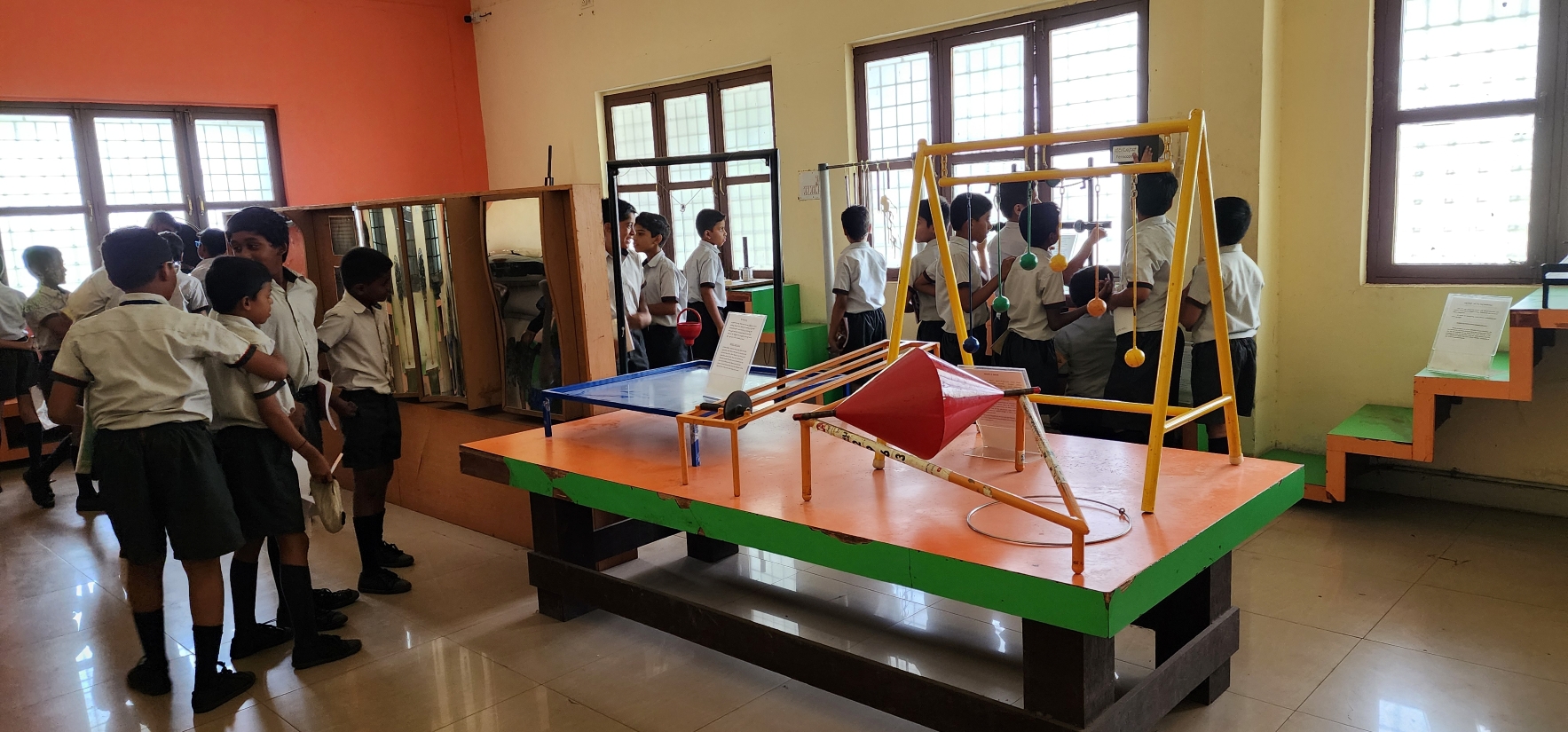
.The visit to the Ballari Sub-Regional Science Centre was organized as part of our school’s educational activities to promote experiential learning. The trip aimed to help students understand scientific concepts in a practical way, stimulate curiosity, and make science enjoyable through hands-on experiences.
On Tuesday, 4 August, the students of Class VI visited the Sub Regional Science centre, near the district stadium as a part of the educational programme. It is 5.7 Km away from Dream World School.
The students were filled with excitement right from the start. Upon reaching the science centre, they were welcomed by guides who explained the layout and gave instructions about the exhibits. The children were divided into small groups for better interaction and learning.
Hence, the children explored the indoor science galleries that include the following:
1. Human Body Section - 3D models and cutaway display showed the functioning of the heart, brain, and other organs.
2. Physics Section - Interactive setups demonstrated electricity circuits, magnet experiments, and principles of simple machines.
3. AI Gallery – The AI gallery introduced students to the evolution of Artificial Intelligence and explained how AI works with the help of sensors. Informative videos demonstrated the applications of AI in various fields such as healthcare, education, transportation and robotics helped students understand its growing role in everyday life.
4. Outdoor Science Park - The park had working science models like giant levers, pulleys, sound tubes, and periscopes.
The digital planetarium at the centre is one of its biggest attractions. This planetarium is more than just a theatre — it is a gateway to the cosmos. With its 7.5-meter dome, high-resolution projection, and surround-sound system, it transforms the entire ceiling into a living night sky. The interior is designed to create a dark, theatre-like atmosphere so that the audience can feel as if they are truly out in space. The immersive 360-degree visuals made them feel like they were floating in space.
The children looked up at the dome in surprise, some even lay back in their chairs before the show began. As the lights dimmed and the dome lit up with stars, there was a soft “wow” from the audience. It felt like stepping into a spaceship about to take off.
The planetarium shows covered:
1. The Solar System – detailed visuals of the sun, planets, moons, and asteroids.
2. Milky Way and Beyond – A simulated journey through our galaxy
3. Constellations
Many students reported that they had a positive experience at the planetarium and gained valuable knowledge during the visit. The planetarium gave children visual memory of the sky, which helps recall facts later in science lessons. It also encouraged them to think beyond earth and imagine possibilities like space travel and life on other planets.
The visit to the Ballari Sub-Regional Science Centre proved to be an enriching educational experience. It brought science to life, making it exciting and relatable. The hands-on approach, visual displays, and real-life demonstrations helped students connect classroom lessons with practical applications. Trips like this not only strengthen academic learning but also inspire young minds to explore the wonders of science.
We thank Ms. Amrutha G. Patil and her team for their support in fulfilling our objective of the field trip more productively.
School Re-Opening Day Celebration of 2024-2025
A Report on Field Trip # 2 (Class - 7)
To: Siri Agro Cotton Industries - Mundrigi (Ballari Dt.05/08/2025 2026-2027
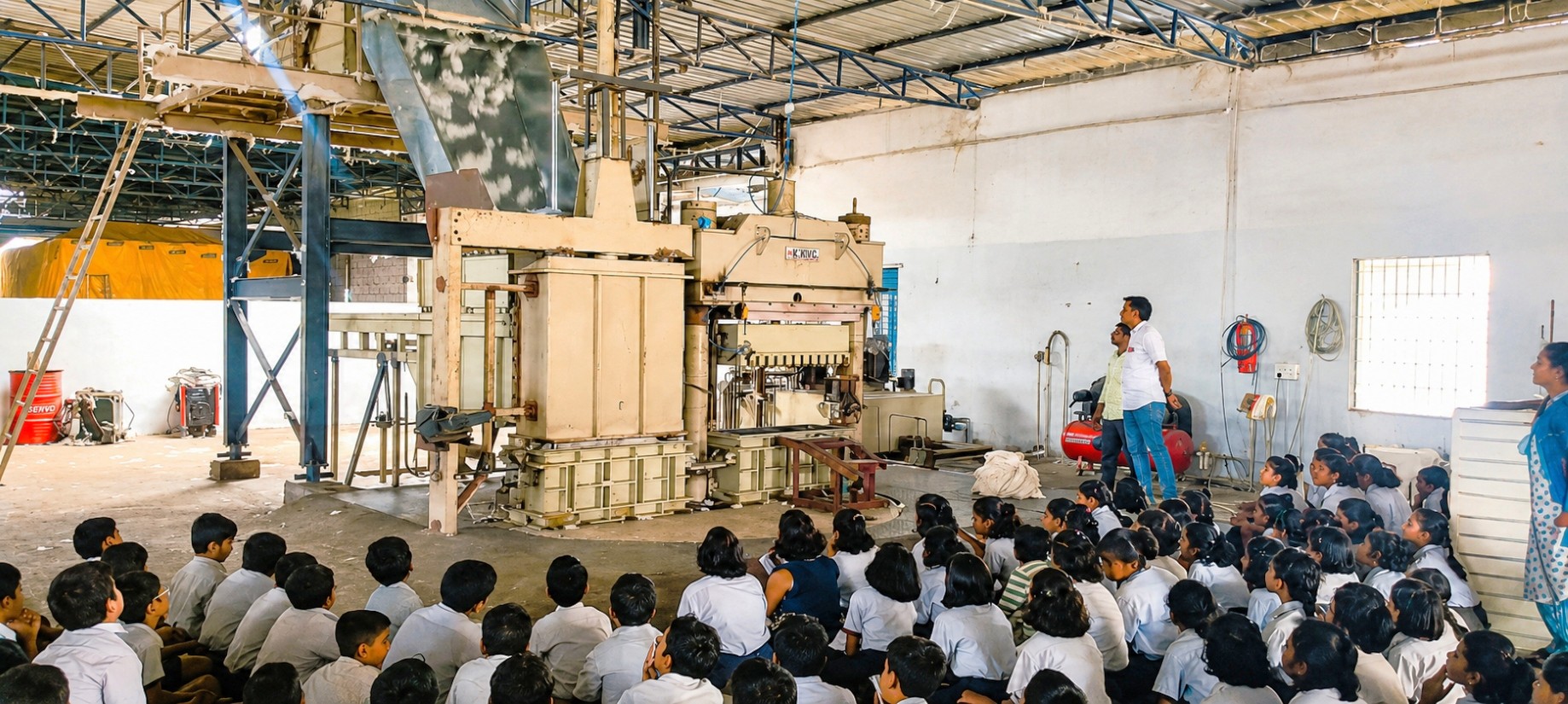
Clothes are one among the basic needs of our life. Clothes are obtained from plants or animals. Among plants and animals, it is the plant fibre most preferred by humans. One such plant fibre is cotton. It is soft, can be dyed easily into different colours and absorbs more moisture. Due to these advantages, different types of fabric materials are made using cotton.
With the objective to know the steps involved in the processing of cotton and to observe the process of ginning, our students of Class VII visited the Siri Agro Industries as a part of an educational programme on Tuesday, 16 December 2025. It is about 8.5 km away from Dream World school.
Siri Agro Industries was established on 26 May 2011. It is spread over 2 acres of land and has 20 ginning machines and 1 double pressing machine. At present, they have 16 workers working in their industry Mr. Krishna Kanth, is one of the managing directors of this industry.
The team at the industry is headed by Krishna Kanth who guided our students throughout the field trip and explained about the ginning process. They collect raw cotton (kappas) from the farmers in the radius of 100 km of Ballari. The cotton is collected from farmers at the cost of `7300 per quintal. The raw cotton is separated based on the quality (whiteness and length) of the cotton. The separated cotton is sent to ginning process where the seeds and fibre (cotton) is separated, the fibre obtained is called the lint. Later, the lint is sent to the pressing machine and is baled (lint packed for marketing). The bales of cotton are then exported to Coimbatore in Tamil Nadu. Later on, the processed cotton is sent to further process before it is supplied to the market. The separated seeds are sent to the oil industries for extracting cotton seed oil which is used for cooking and to make cotton seed cake as fodder for the cattle. In recent years, the farmers started growing the BT 2 Bacillus Thuringiensis which is a genetically modified cotton variety that is tolerant to bollworms and other insect pests and as usual to increase the yield of the crop.
This visit helped our students to gain the practical knowledge of converting raw cotton into lint and how it goes to market. We thank to the team of Siri Agro Industries for their support and care in fulfilling our objective of this field trip successfully.
School Re-Opening Day Celebration of 2024-2025
A Report on Field Trip # 2 (Class - 8)
To: Agricultural Farm – Ibrahimpura, Ballari. Dt.12/08/2025 2026-2027
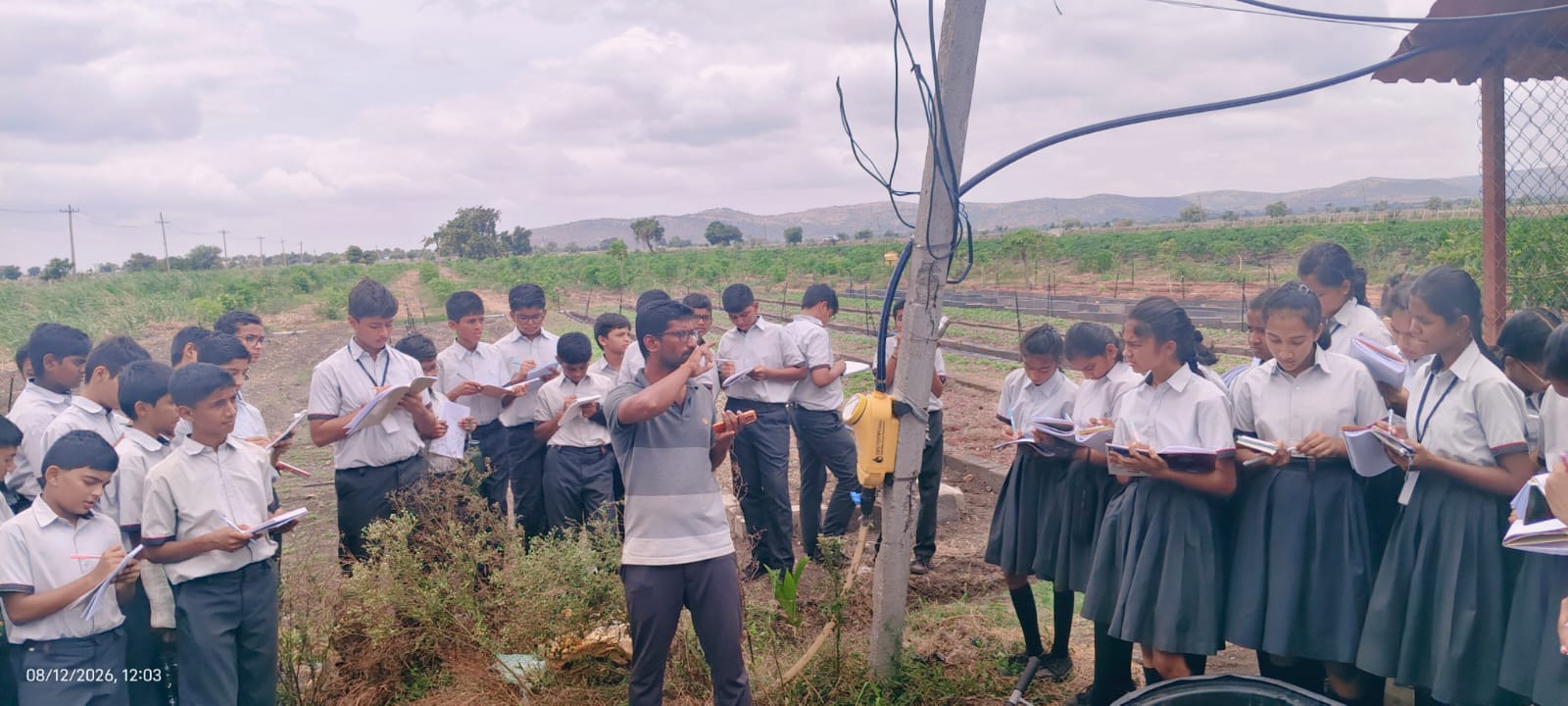
Agriculture is the systematic practice of cultivating plants and livestock in order to provide facilities to the human beings. In the rise of the sedentary human lifestyle, agriculture is the key for the development. It is the basic work for the people to live in the society and a main source of livelihood. Most of the population in the rural areas is dependent on agriculture as their main source of income. With the objective to know the basic agricultural practices and to observe the process involved in the organic farming our students visited the agricultural farm as a part of an educational programme.
On Wednesday, 12 August 2026, the students of Class VIII visited the agricultural farm located in Ibrahimpura along with their respective teachers. The farm is about 15 km away from Dream World School that is spread over 8 acres of land. Mr. Ravi Kumar, an M.B.A graduate, who is passionate towards organic farming, is the owner of this agricultural farm.
Mr. Ravi Kumar guided our students throughout the field trip. He explained to our students about the steps involved in the process of agriculture. Different types of crops such as fig, guava, sugarcane, pomegranate, maize, , lemon, air potato, green leafy vegetables etc. are cultivated in the agricultural farm. They are practicing intercropping method and drip irrigation in the field.
The field is being powered by a biogas plant, a system that converts organic matter into renewable fuel, for energy generation. For this he uses 40 kg of fresh cow dung with 80 l of water. Gas that is produced after 15 days is used in the field every day for 2 to 3 hours.
The farming methods include the use of organic manure, jeevamrutha, gokrupamrutha (200 l of water, 2 kg of jaggery, 2 l buttermilk and 2 l of culture liquid) and vermi compost (cow dung+ agricultural waste + earthworms). The jeevamrutha of 200 l is prepared with the composition of 2 kg of besan flour, 10 l of cow urine, one handful of mud of that land, 10 kg of cow dung and 200 l of water. For good growth of the plants they also use fish amino acid (10 kg of fish + 10 kg of jaggery) a natural fertilizer rich in nitrogen, potassium and phosphorous.
The agricultural products are sold in the market nearby to the taluk office and on every Wednesday near Gandhi Bhavan near Royal Circle in Ballari. The main motto behind the organic farming is to provide chemical free products to the society.
This visit helped our students to gain the practical knowledge of basic agricultural practices and crop patterns. We thank the owner of the agricultural farm for his support and care in fulfilling our objective of this field trip successfully.
School Re-Opening Day Celebration of 2024-2025
A Report on Field Trip # 2 (Class - 9)
To: Sanganakallu Neolithic Site, Ballari Dt. 07/08/2026 2026-2027
History is the story about mankind with evidences from the sources that include archaeological and literary. Archaeological sources include the artefacts that comprise of skulls of humans and animals, stone tools, pottery, bricks and clay used in construction, coins, seals and all the literary sources that includes written evidences on rocks, copper plates, inscriptions, books and so on. Early humans based on their use of stones as tools and weapons are classified into three stages – Palaeolithic, Mesolithic and Neolithic.
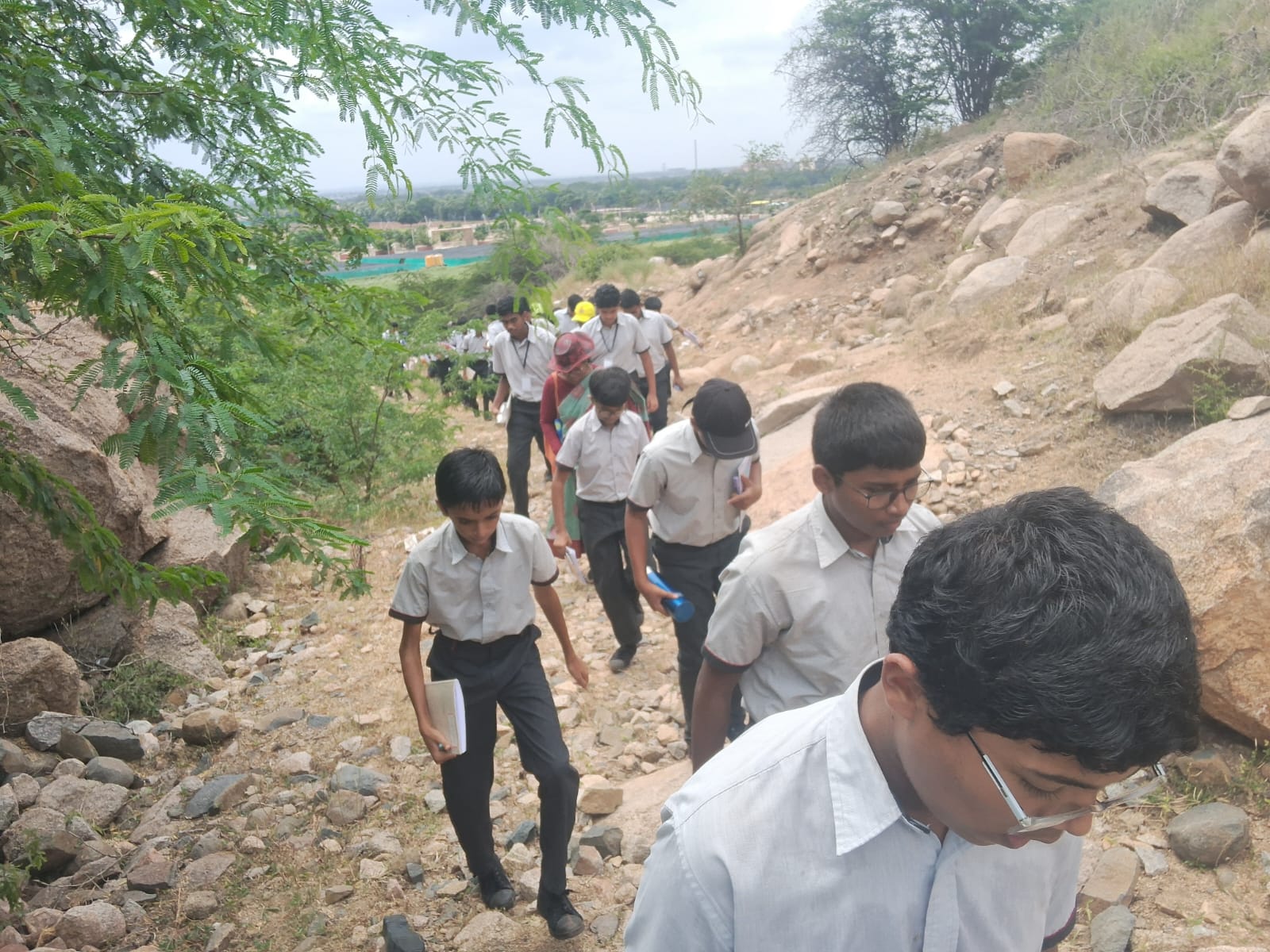
Sanganakallu Hill is a Neolithic Site, and a source of archaeology to learn about the early human history. With the objective of learning about the lifestyle of the Neolithic civilisation we went for the field trip to Sanganakallu with the Students of Class IX, on 07th August 2026, along with teachers which is 7 km away from Dream World School.
Mr. Rama Das, a researcher and a guide gave us the historical background of the site and the information about the human lifestyle in the Sanganakallu site.
The Neolothic site on the granite hill is a unique prehistoric site spread over 1000 acres in Ballari which is regarded as the world’s second largest Neolithic site. The site gives us vast evidences of pre-historic age fossils, stone tools and pottery. The Sanganakallu hills also known as the Peacock Hill/Kupgal Hill is a major factory site for making stone tools with local dolerite rock formations dating back to 2000 B C.
It was first explored by Mr Robert Bruce Foote in 1885-1886 and later in 1967 it was excavated by Mr. B. Subba Rao. We also find the details about the site in F R Allchin’s (South Asian Archaeology and Indology) Book named Piklihal Excavations (1960). This was also backed up with systematic joint field surveys and excavations since late 1990s by the collaboration of Karnatak University, Dharwad with University of Cambridge and other European institutions. The focus was on investigation of Neolithic and Iron Age life-ways, stone-axe manufacturing and early agricultural economics such as millet and pulse cultivation.
The Hiregudda site at Sanganakallu, is store of artefacts like stone tools at the stone axe factory, pottery (available due to semi-arid nature of the region), shell bone of a horse (20,000 years ago), steatite beads and neolithic age ash mound fragments, and orchestra birds’ eggs (40,000 years ago). The tools made in this place were used for agriculture, domestication, drawing, cutting and pounding. There were traces of human settlements on the hill which showed about check dams for the storage of water, moulders and crusher stones used for grinding and cooking. Pictures of cows, agricultural tools, domestication on the stones help us to identify the type of hill and also direct us as the landmarks on the hill. Even now the descendants of this place settled in Sanganakallu and Hiregudda
visit this site to offer prayers and celebrate festivals in praise of the nature exactly on the days depicted on the stones.
We also were told about the common features to identify the parts of a hill with common shapes through the boulders, which resemble the shapes of the Peacock (hill side with water flow), the Sisters’ (Akka Thangi Gundu), the Nandi (Basavanna, where tools are made), the Three Stones (Mooru Kallu Gudda), and the Bear (Karadi Gudda, with water springs) Hills.
The findings excavated from the site is housed in the “Robert Bruce Foote Archaeological Museum”, Ballari. People can gain extensive information from the Museum with the relics of human history discovered at Sanganakallu.
The students were excited and energetic to explore the hill and know about the history of the Neolithic Site. Some of the findings also forced them to question of how the early men could manage their living with such meagre things found in nature. Today’s human lifestyle is very complicated with so many technological innovations and still it seems to be unsatisfying and disappointing to many. But the findings about the New Stone Age people give us the best example of how life could be best with simple things around them.
We thank Mr. Rama Das for his patience and cooperation in fulfilling our objective in this field trip.